


Labradorite
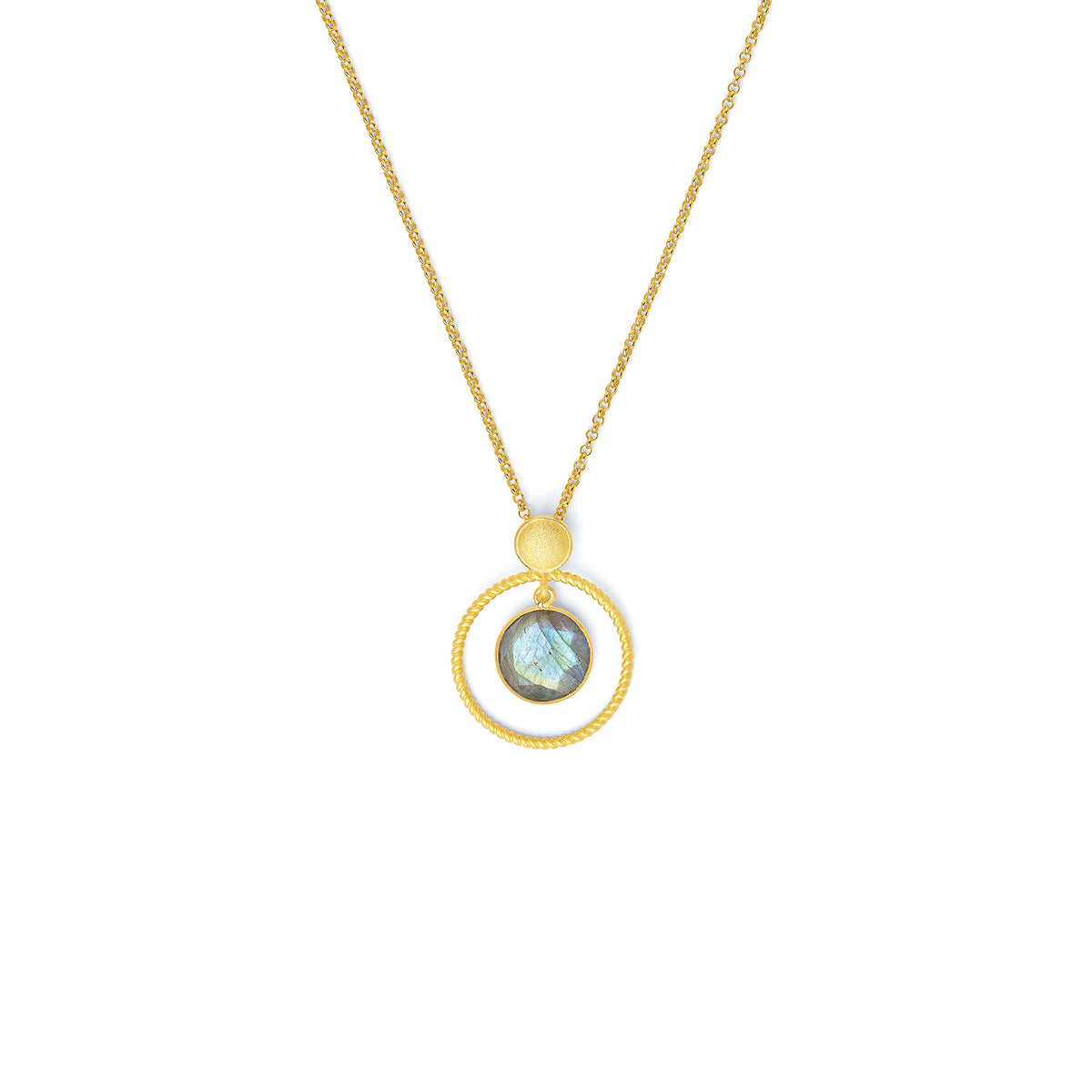
Iridescent in blue, green, and gray.


Labradorite captivates with a lively play of color. Through reflection and absorption, labradorite provides a rich display of color depending on the angle of view and the incidence of light, which is enhanced by microscopic inclusions of minerals such as titanite and magnesite.
This characteristic phenomenon is also known as "labradorescence." This iridescent blue-green gemstone belongs to the feldspar family and owes its name to the Canadian peninsula of Labrador, where labradorite was discovered in the 18th century. Further deposits are located in Finland, Australia, the USA, and Madagascar. The labradorite used by BERND WOLF comes from Zambia.




Effect
Labradorite is said to stimulate the imagination and creativity of the wearer. It is also reputed to strengthen intuition and memory, and to alleviate joint pain.

History
Due to its striking play of colors, labradorite quickly became popular after its discovery. It was not only used as a gemstone, but also processed as a decorative and valuable ornamental stone in magnificent buildings.


